
International student Adwoa Ansong earned her bachelor’s degree with honors from Rutgers University, and has since excelled at NYU GPH with interests in international relations, environmental health and disease surveillance, among others. Adwoa is also a research associate and lab coordinator for GPH’s ISEE Lab, and recently published her first paper. While she’s open to working anywhere, Adwoa has her eye on a return to Ghana, where she can improve its health care system through innovation and creative interventions.
Degree Program/Concentration: MPH in Global Health
Internship Company: Child Family Health International
Internship Location: Accra, Ghana
CHOOSING THE INTERNSHIP
Why Child Family Health International?
Originally I was supposed to go to Kibale, Uganda; my friend's mom is from there and I was excited to go because of that connection. Unfortunately, the Ebola outbreak occurred in that country, and to be on the safe side we had to switch locations at the last minute. The entire team was helpful in figuring out how to pivot; my interests are broad and I like to explore everything, so I was open to data analysis or fieldwork. CHFI is an NGO in consultation with the United Nations; they referred me to the medical director at the Princess Marie Louise Children's Hospital in Ghana, and he helped me figure out the deliverable for my new practicum, which was a grant proposal for HIV research.
THE GIG
What were your main responsibilities? Did you gain any new skills?
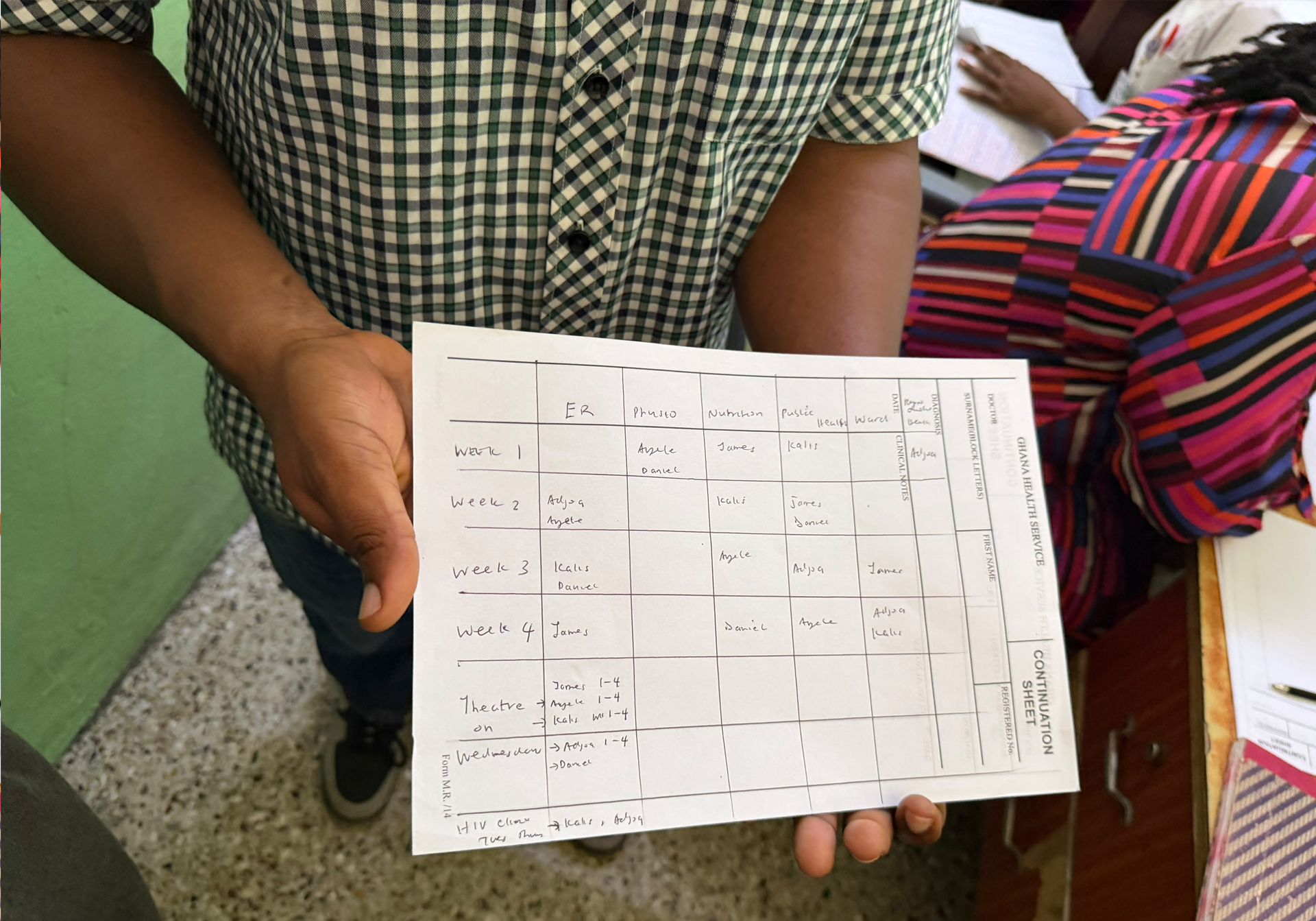
When I arrived in Accra at the hospital it was celebrating its 100th anniversary, which was cool. We took a tour, and I spent the next four weeks familiarizing myself with the departments of family health and reproduction, physiotherapy, community health and the emergency ward. On Wednesdays I had the opportunity to observe surgeries, and on Thursdays I went to the HIV clinic to observe how they conduct their clinicals and interact with patients. Twice a week, I had meetings with the medical director to work on the practicum. Developing the skill of writing a grant proposal opened my eyes to that whole process, which was new to me.
Were there any surprises?
As an international student from Ghana, I’m aware of the health disparities there. But being able to live for four weeks amongst the local people, I didn’t realize how drastic it was. Even though I’m a native, it was eye-opening to see their everyday struggles and how they handle things.
THE SOCIAL AND CULTURAL EXPERIENCE
How did you connect with other people?
There were students participating from all over the world, and working with them was amazing because we all shared in common what we wanted from our experience—tangible results that help people. I actually did the internship alongside my classmate and friend, who's also a second-year student at GPH. Some of the other students were first-year medical students or other health majors; whether it was biostatistics or biology, we all helped each other. Bonding with the staff at the hospital was also really cool for me; because I’m native, I was just able to connect with them more, I guess.
I'd usually get to the hospital by 8:00 am, and work in the departments until 2:00 pm, unless I had a meeting with my director until 5:00 pm. But after that we were free: We’d clock out, go to dinner, hang out, explore, go on tours. Everyone loves Accra; the people are so welcoming, there's a lot to do, and the food is so good. It was great to get to know each other outside of academics, and the schedule gave me a sense of what I could be doing with a future career in public health.
How has your internship shaped your goals? What's your "dream career" now?
I’m really open to working anywhere in the world, but career-wise I would love to go back home and work in the Ghana Health Service on some level. This experience definitely confirmed my dream to go back, because now that I've been there as a public health student, I've seen what I can bring to the table and what I need to learn more about in order to successfully help my community. In class they talk about not having a savior complex; we were trained to actually work with the community and understand their way of life. Having this exposure has already put me ahead in knowing how they orchestrate their programs and how the locals interact with their physicians. It really did solidify that this is exactly what I want to do.
ADVICE FOR CLASSMATES
What would you tell other students?
First, definitely start looking early. I started in November because I wanted to do something international. If I hadn't started early, then switching to another internship because of Ebola would have been a mess, much harder. Find a good organization or company if you're working internationally. And be aware that with the international aspect, it's going to take more time and money. But even if you do something domestically, it's good to email companies and reach out to people in organizations. The second thing I've learned through this internship is to always have an open mind and to practice humility. It taught me that we're not perfect and the world is not perfect, so we have to have patience and learn from each other in any way we can.
Any memorable moments?
I love attieke! It's originally from Côte d'Ivoire, cassava flakes that are boiled and steamed, and typically eaten with fish. I took my colleagues to Chez Clarisse in Osu, Accra, and they served the best attieke I've ever had in my life! The fish was huge, and my colleagues also loved it. Everything there is cheaper as well; the fish we ate would cost $50 in New York, but it was only $20 in Ghana. Everybody enjoyed themselves, and since they’re from different backgrounds and ethnicities, it was cool to introduce them to my culture and food so they could enjoy it as