
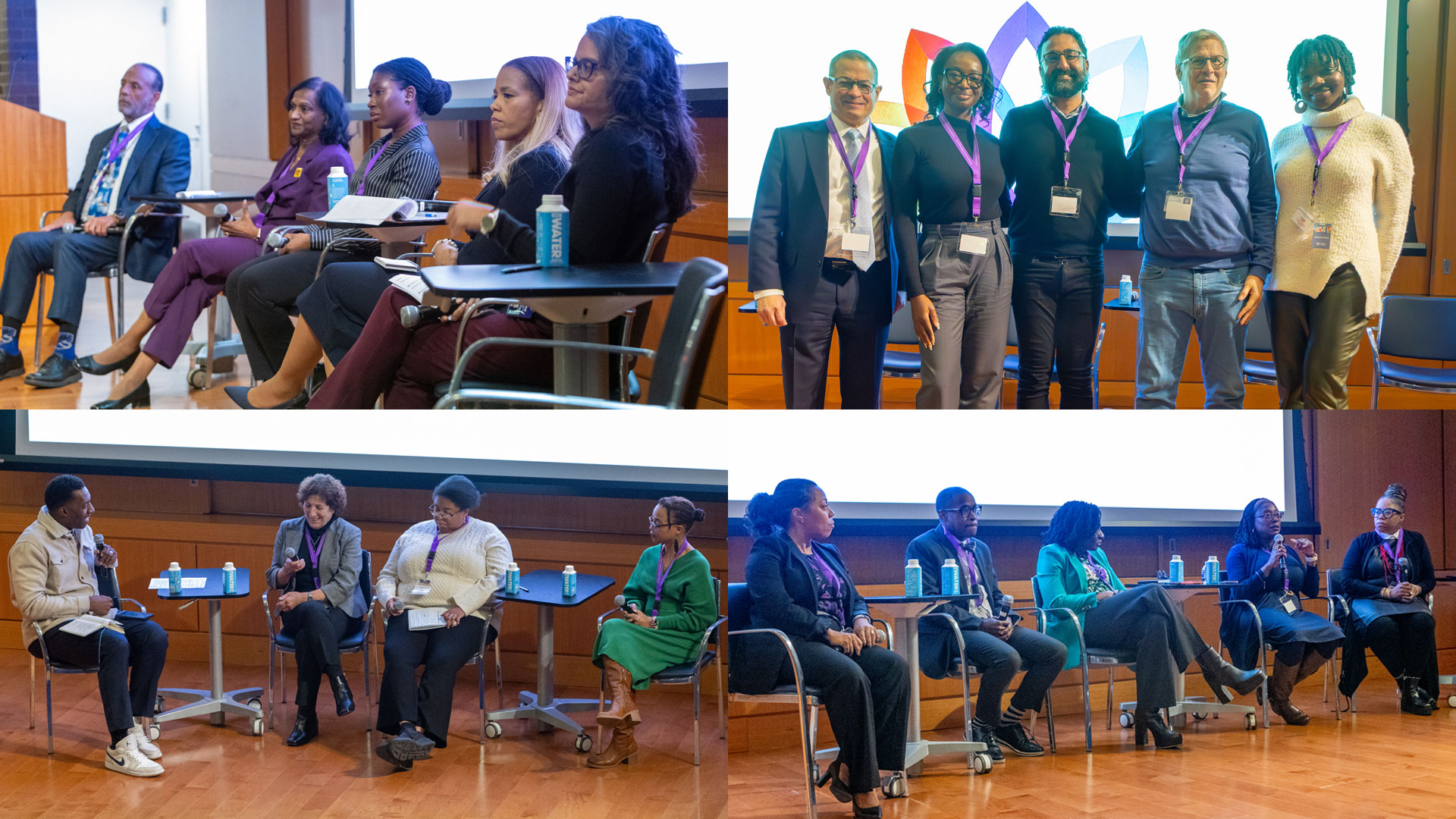
On November 12, 2025, the Sickle Cell Disease: 115 Years Later Symposium was held at NYU’s Medical Science Building. A partnership between the ISEE Lab and the Institute for Excellence in Health Equity (IEHE), the event convened clinicians, researchers, policymakers, and advocates to reflect on over a century of Sickle Cell Disease (SCD) progress and chart a future focused on systemic change and equitable care.
Opening remarks highlighted the enduring legacy of SCD research, the disproportionate burden borne by patients, and the urgent need for structural change beyond biomedical advances. Dr. Emmanuel Peprah noted that while SCD is a global condition affecting millions, it is also a local challenge for New York; approximately 10% of all individuals living with SCD in the United States reside in New York State, with the highest concentration in New York City.
Dr. Michael Merson emphasized the interwoven clinical and structural challenges that shape patient outcomes, while a clip from the TV show The Pitt illustrated the physical toll of severe SCD pain crises on patients. Despite this prevalence, Dr. Gbenga Ogedegbe highlighted that research funding for SCD remains disproportionately low compared to conditions with a similar disease burden, such as cystic fibrosis.
Health Equity in SCD Care
A primary theme of the first half of the symposium was that addressing SCD disparities requires more than medical treatments. The speakers called for several specific interventions:
- Stigma Reduction: Targeted training for providers, especially in emergency departments.
- Integrated Care: Care models that incorporate social support, behavioral health, and peer navigation.
- Data Systems: Enhancing data collection to better reflect the lived experiences of patients rather than clinical metrics alone.
Care Across the Lifespan
The transition from pediatric to adult care was identified as a critical period requiring multidisciplinary care teams. Presenters highlighted reproductive health education, improved pain management protocols in emergency settings, and the need for family-centered resources for individuals living with SCD.
From Policy to Practice: Community Partnerships
The final session addressed the importance of long-term investment in community-based organizations, scaling culturally responsive care models, and elevating patient voices in governance. Speakers urged unified advocacy—a lesson drawn from prior public health success stories such as HIV advocacy.
From Reflection to Action
Several consistent messages emerged across sessions:
- Scientific advances will only matter if systems are structured for equitable access.
- Sustainable community partnerships are essential for long-term success.
- Data collection and care models must reflect lived experience, not just clinical metrics.
- Advocacy, coordination, and investment across sectors are necessary.
- Individuals living with SCD must be centered in leadership, governance, and decision-making processes.
The event concluded with a poster session showcasing research from early-career professionals on behavioral therapies and emerging therapeutic approaches. The symposium reinforced that the future of SCD care depends on combining medical innovation with social justice and community-driven advocacy.